How To Budget For Your European Holiday
Working out how much a trip to Europe really costs can be confusing, especially when most websites give generic estimates that don’t match real travel. This guide breaks down the exact amount we spent on a 38‑day trip across Europe — including flights, accommodation, transport, food, petrol, and daily spending — so you can build an accurate and realistic Europe travel budget for 2026 and beyond. If you’re searching for genuine numbers, practical budgeting tips, and a clear idea of what to expect, this page gives you a complete, real‑world Europe trip cost based on our own experience.
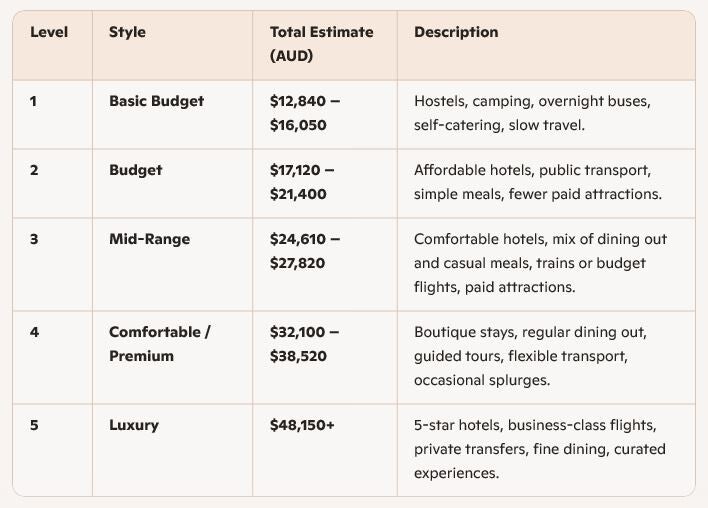
What type of Holiday do You Want?
How Much Does a Europe Trip Cost in 2026?
Based on our 2025 Europe holiday, I went back and re‑checked accommodation prices for the same destinations and the same time of year. I also compared updated flights, train fares and other transport costs. To keep this 2026 budget realistic, I’ve added 7% to our 2025 numbers — a simple way to account for price increases and give you a clearer idea of what a similar trip might cost next year.
Depending on your travel style — with 1 being Basic Budget and 5 being Luxury — you can now see what today’s prices would look like if you were booking a 38‑day Europe trip for August–September 2026.
Prices will always shift throughout the year. Shoulder‑season travel (spring and autumn) and winter months are often cheaper, especially for accommodation and flights. But this breakdown gives you a solid, real‑world starting point for planning your own Europe trip budget.

How We Planned Our Europe Budget
What We Budgeted For
We focused on four core categories: accommodation, daily spending, long‑haul flights, and internal transport. Setting these numbers early gave us a clear picture of what we could comfortably afford and where we had flexibility to adjust as prices changed.
Why We Chose a Mix of Airbnb and Hotels
To keep our accommodation costs balanced, we aimed for an average of AU$200 per night. Some destinations were naturally more expensive, while others were far more affordable, so using a mix of Airbnbs and hotels gave us the flexibility we needed without compromising on comfort or location.
How Reward Points Lowered Our Accommodation Costs
One of the biggest savings came from credit card reward points, which covered 11 nights of our trip. Those free stays brought our actual average down to AU$158 per night — a huge help that created extra room in the budget for pricier destinations later on.

Our Accommodation Budget
Our AU$200 Per Night Budget
AU$200 per night worked well as our baseline, especially knowing that destinations like Switzerland and Dubai would naturally push the upper limits. Having this target in place helped us balance out the more expensive nights with cheaper stays elsewhere.
How Reward Points Brought the Average Down to AU$158 Per Night
Using reward points for 11 nights made a noticeable difference. Instead of stressing about pricier cities, we could enjoy them knowing our overall average was still on track. Those free nights created a comfortable buffer that kept the budget steady.
When Accommodation Was Most Expensive
As expected, Switzerland and Dubai were the biggest budget stretchers — stunning places, but undeniably expensive. These were the destinations where our baseline and reward‑point savings really paid off.

Daily Spending Breakdown
Why AU$215 Per Day Was Enough (€115)
We allocated AU$215 per day for two people to cover meals, snacks, petrol, and general day‑to‑day spending. It turned out to be more than enough. On slower days — wandering through old towns, relaxing by the pool, or taking scenic drives — we barely spent anything, and the leftover amount rolled into the following day.
Low‑Spend Days vs. Splurge Days
This rhythm worked perfectly. Quiet days naturally balanced out the busier ones, giving us room to enjoy nicer meals or activities without worrying about going over budget.
What We Didn’t Include (Souvenirs & Shopping)
Personal shopping and souvenirs were kept separate so they didn’t distort our daily budget or give a false sense of overspending.

Return Flights From Melbourne
Total Cost of Return Flights From Melbourne
Our return flights from Melbourne came to AU$4,600 for two people, which lined up well with typical peak‑season pricing for August–September.
How We Saved With Airline Discounts and Credit Card Perks
Booking directly with the airline — and using credit‑card‑linked discounts with Emirates and Qatar — saved us around AU$400 compared to booking through a travel agent. It’s a simple trick, but it made a noticeable difference to the overall budget.

Europe Transport Costs
Total Spend on Trains, Ferries, Buses & Car Hire
Across trains, ferries, buses, and a hire car, we spent AU$2,870. Europe’s transport options vary widely, but planning ahead helped keep this category predictable and avoided any last‑minute price spikes.
How Early Booking Saved Us Money on Trains
Apps like Omio and Trainline occasionally offered up to 20% off when booking through their mobile apps. That said, we always compared prices directly with the train companies — and in some cases, the official websites were cheaper.
Car Hire Tips: Manual vs Automatic, Insurance & Comparison Sites
Automatic cars were consistently more expensive, so choosing manual where possible saved us a noticeable amount. We used comparison sites to find the best rental prices, but always purchased insurance directly from the rental company for peace of mind and clearer coverage.

How Costs Varied by Country
Where We Overspent (Switzerland & Dubai)
These destinations were easily the most expensive of the trip. Everything — from meals to accommodation — cost noticeably more than average, and it showed up quickly in the daily spend.
Where We Spent Less (Germany & Sicily)
Once we reached Germany and Sicily, our spending dropped significantly. Affordable meals, cheaper accommodation, and lower transport costs helped bring the budget back into balance.
How Country Hopping Balanced Everything Out
This is where multi‑country travel really shines. The high‑cost destinations were naturally offset by the more affordable ones, and by the end of the trip, the overall budget evened out beautifully.

How We Saved Money
Airbnb Voucher Discounts
Our private health insurance provider offers 5% off Airbnb vouchers, which instantly reduced our accommodation costs. Using these discounted vouchers saved us AU$165 before the trip even began — an easy win for anyone looking to lower Europe accommodation expenses.
Flight Savings Through Direct Booking
Booking flights directly with the airline saved us AU$400 compared to using a travel agent. Credit‑card‑linked discounts with Emirates and Qatar made direct booking one of the most effective ways to cut long‑haul flight costs.
Train Booking Apps and Mobile‑Only Discounts
Apps like Omio and Trainline helped us compare Europe train prices quickly and occasionally offered mobile‑only discounts of up to 20%. We still checked prices with the train operator directly, as official websites were sometimes cheaper — a key step for keeping transport costs down.
Car Hire Comparison Tools and Insurance Tips
Car hire comparison sites made it easy to find the best rental prices across Europe. For insurance, we always booked directly with the rental company, which consistently provided clearer coverage and better value than third‑party options — an important factor in avoiding unexpected costs.

What We Learned About Europe Travel Costs
Why Costs Vary So Much Between Countries
Europe isn’t a one‑size‑fits‑all destination. Countries like Switzerland and Dubai will stretch your budget quickly, while places such as Germany and Sicily feel refreshingly affordable. The variation in accommodation, food, and transport prices is one of the biggest reasons overall trip costs can fluctuate so much.
How Flexibility Helps You Stay on Track
Staying flexible made it easy to keep our spending under control. Simple adjustments — cooking at home, choosing a cheaper Airbnb, or swapping a paid activity for a scenic walk — helped us stay within budget without feeling restricted or missing out.
What We’d Do the Same Next Time
Mixing accommodation types, using reward points, and staying adaptable with daily spending all worked incredibly well. We’d plan the same way again without hesitation. A budget should guide you, not limit you — you’re there to enjoy yourself. If you go over occasionally, that’s fine. It’s a framework, not a rulebook.
Create Your Own Website With Webador