The Tools We Use to Search for Flights
There are several flight‑search engines we rely on when planning trips, whether we’re flying out of Australia or booking flights within Europe. These tools make it easy to compare airlines, routes, travel times, and prices across multiple days, helping you quickly spot the best one‑stop options without spending hours searching manually.
We’ll often compare airlines directly as well, especially when we already know which carriers have the most reliable connections or the shortest total travel time. Using both search engines and direct airline checks gives us a clear picture of the best options before booking.
What we don’t use is a travel agent. Their fees can add unnecessary cost, and they limit your flexibility when it comes to choosing seats, managing your booking, or making changes later. By searching ourselves and booking directly with the airline, we stay in full control of our flights, avoid extra charges, and usually secure a better overall deal.
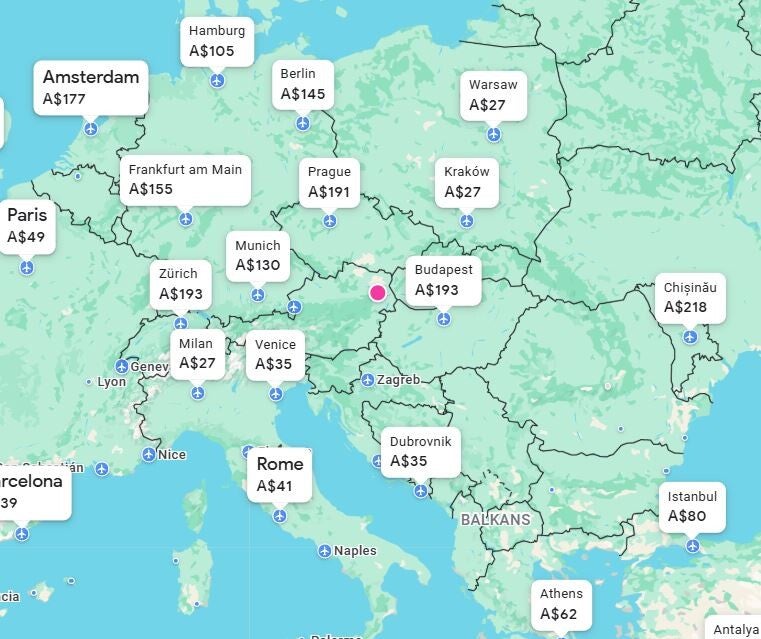
Google Flights for Flexible Route Planning
When planning internal flights, we open Google Flights and select “One Way.”
Then we enter our departure city and leave the destination blank.
Pressing enter brings up a map and a list of countries you can fly to, along with their prices.
This is perfect when you’re not locked into a specific route and want to see the cheapest or most convenient next destination.
Compare Airlines for Each Destination
Once you click on a country or city, Google Flights shows a list of airlines that operate that route. This makes it easy to compare:
- flight times
- stopovers
- prices
- departure airports
- travel duration
It’s a quick way to see all your options without checking each airline individually.
How We Book Our Flights
Booking flights can feel overwhelming, but our process keeps it simple, flexible, and cost‑effective. We usually fly out of Melbourne, Australia, but this method works no matter where you’re departing from.
1. Start With Skyscanner
We begin by searching on Skyscanner, selecting our departure and arrival airports with one stop only. This filters out long, complicated routes and highlights the airlines offering the best one‑stop connections and travel times.
Once we find the airlines with the best schedules and prices, we don’t book through Skyscanner — we use it purely as a comparison tool.
2. Book Direct With the Airline
After we’ve chosen the best option, we go straight to the airline’s website to book or compare prices again. Booking direct gives you far more control over your trip, including:
- Choosing your own seats
- Selecting luggage options
- Reviewing cancellation and change‑of‑flight fees
- Managing your booking easily
- Adding meals or special requests
- Access to the airline’s customer service and lounges
Travel agents don’t always give you these choices, and changes can be slower or more complicated and they will charge a fee.
3. Easier Changes and Cancellations
If something goes wrong — a missed connection, a change of plans, or a cancellation — dealing directly with the airline is almost always easier. You can call them, visit an office in the country you’re in, or manage changes online.
A travel agent will end up contacting the airline on your behalf anyway, which adds delays, time‑zone differences, and removes your control. In our experience, airlines have been straightforward and helpful when we’ve booked direct, whether online or on the phone.
Budget Airlines in Europe
There are plenty of budget airlines in Europe that offer cheap and convenient ways to travel between countries. We’ve flown with Vueling, a Spanish low‑cost airline, several times and have always had good experiences. We’ve also used easyJet and Ryanair without any issues.
Just keep in mind that budget airlines often come with extra costs. Things like checked luggage, seat selection, priority boarding, and meals are usually add‑ons, and these can quickly increase the total price. It’s worth doing the maths before booking — sometimes the national carrier or the country’s own airline ends up being cheaper once you factor in everything that’s included.
Pros and Cons of Budget Airlines
Pros of Budget Airlines
- Very low base fares
Budget airlines often offer incredibly cheap tickets, especially if you book early or travel mid‑week. - Great for short flights
Most internal European flights are under two hours, so you don’t need the extras that full‑service airlines provide. - Large network of routes
Airlines like Vueling, easyJet, and Ryanair fly to hundreds of destinations, including smaller airports that major carriers don’t serve. - Frequent sales and promotions
Flash sales can make spontaneous trips surprisingly affordable. - Simple point‑to‑point travel
No complicated connections — just quick hops between countries.
Cons of Budget Airlines
- Extra fees for almost everything
Checked luggage, larger cabin bags, seat selection, meals, and priority boarding all cost extra. These add‑ons can quickly increase the total price. - Strict baggage rules
Even being slightly over the size or weight limit can result in expensive gate fees. - Secondary airports
Some budget airlines use airports far from the city centre, meaning longer travel times and higher transport costs. - Limited flexibility
Changes, cancellations, and refunds are often more restrictive and more expensive than with full‑service airlines. - Less comfortable seating
Seats are usually tighter with less legroom, and there’s no free food or drink. - Boarding can feel chaotic
Priority boarding queues, limited overhead space, and fast turnarounds can make the experience feel rushed.
Create Your Own Website With Webador